
Table of Contents
- Step 1: Identify the Signs of Heat Damaged Hair
- Step 2: Test Your Hair Porosity and Elasticity
- Step 3: Choose the Best Products for Heat Damaged Hair
- Step 4: Balance Protein vs Moisture Treatment for Hair
- Step 5: Wash, Condition, and Deep Treat Without Causing More Damage
- Step 6: Stop Heat Styling and Trim Split Ends
- How Long Does It Take to Repair Heat Damaged Hair?
- Conclusion
- Frequently Asked Questions
Last Updated: September 22, 2026
Step 1: Identify the Signs of Heat Damaged Hair
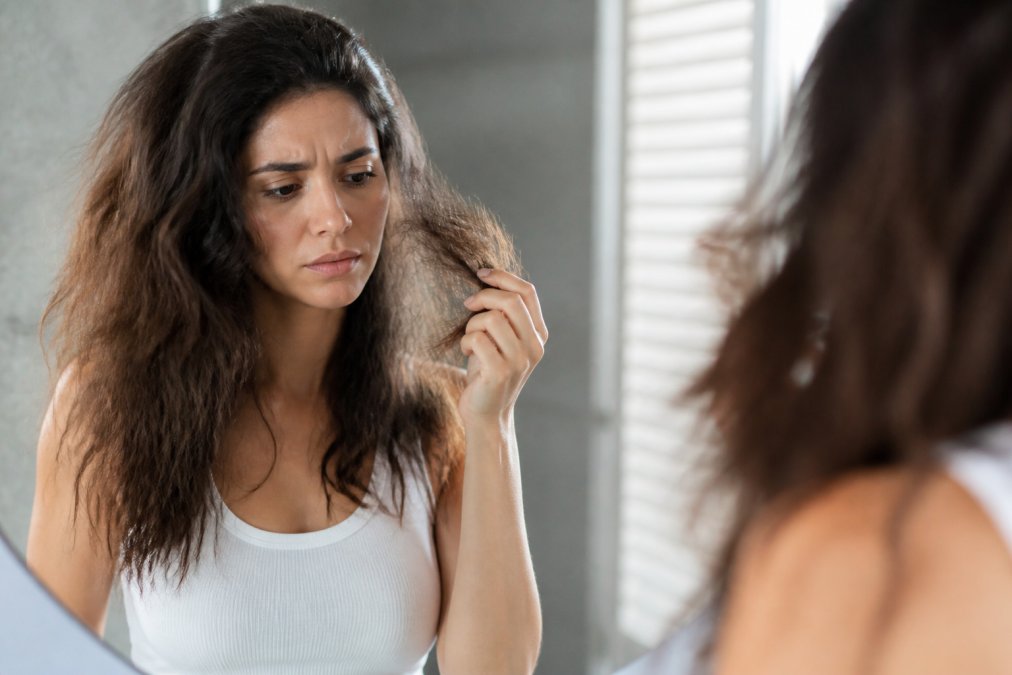
Heat damaged hair is structural damage to the hair shaft caused by repeated high-temperature exposure from flat irons, blow dryers, and curling wands. The heat strips moisture from the cortex and weakens the bonds holding each strand together.
- Split ends that keep coming back weeks after a trim
- Dry, brittle strands that snap when you run a comb through them
- Frizz that won't calm down no matter what you apply
- Dullness and a loss of natural shine
- Hair that feels rough instead of smooth when you touch it
Step 2: Test Your Hair Porosity and Elasticity
A porosity test tells you how well your hair absorbs and holds moisture. Heat damaged hair usually has high porosity, meaning the cuticle is lifted and moisture escapes as fast as it enters.
Step 3: Choose the Best Products for Heat Damaged Hair
The best products for heat damaged hair contain bond-building ingredients, amino acids, and peptides that target the hair shaft directly, working on the cortex rather than just the surface.
Look for these on the label:
- Bond-building compounds that reconnect broken protein links
- Amino acids that fill gaps in the hair shaft
- Peptides that strengthen strands over time
- Leave-in conditioner for daily moisture
- pH-balanced formulas that keep the cuticle flat
What to Look for in Bond-Building and Repair Formulas
Check the ingredient list before you buy. Bond-building formulas should list amino acids and peptides near the top, not the bottom. Skip anything mostly water and silicone, which coats hair without repairing it.
Step 4: Balance Protein vs Moisture Treatment for Hair
Protein vs moisture treatment for hair is a balance, not a choice. Protein rebuilds structure by filling gaps in the cortex; moisture adds flexibility so the strand bends without snapping. Too much of either causes new problems, and protein overload symptoms look almost identical to protein deficiency if you're not testing.
Run the Wet-Stretch Test Before You Buy Anything
Before you pick a treatment, wet one clean strand and stretch it gently between your fingers:
- Stretches far, then snaps with no bounce back, needs protein. The strand is mushy and over-moisturized.
- Snaps almost immediately with no stretch, needs moisture. The strand is stiff and brittle.
- Stretches, then returns to its original length, balanced. Maintain with a moisture mask and skip the protein this cycle.
Match the Treatment to the Symptom
| Treatment Type | What It Does | Signs You Need It | How Often |
|---|---|---|---|
| Protein treatment | Fills gaps in the hair shaft | Mushy, stretchy hair that won't hold a curl; wet hair that feels like gum | Every 4-6 weeks |
| Moisture treatment | Adds softness and flexibility | Stiff, straw-like hair that snaps; rough texture even when wet | Weekly |
| Bond builder | Reconnects broken protein links | Chronic breakage and split ends; damage from bleach, color, or heat | Every 2-3 weeks |
Watch for Protein Overload
Protein overload is the most common mistake when trying to fix heat damage fast, and the signs are easy to miss because they mimic damage:
- Hair feels stiff and straw-like even after conditioning
- Strands snap instead of stretching
- Tangles get worse, not better, after treatment
- Hair looks dull and loses shine within a day of washing
Sequence Matters
When you use more than one treatment in the same week, order them like this:
- Clarify first if you have heavy product buildup, so the treatment can actually reach the cortex.
- Bond builder on damp hair, following the label's timing.
- Moisture mask after the bond builder to seal in flexibility.
- Protein treatment only if the wet-stretch test calls for it, and never on the same day as a bond builder.
What to Do If You're Not Sure
When in doubt, moisture is the safer default. Over-moisturized hair feels limp and stretchy but recovers within a week of cutting back on masks; over-proteinated hair can take a month or more to soften, and severe cases need the brittle ends trimmed off. Start with moisture, test weekly, and add protein only when the wet-stretch test says so.
Step 5: Wash, Condition, and Deep Treat Without Causing More Damage
Wash day is where heat damaged hair either recovers or loses ground. The goal: clean the scalp without stripping the lengths, keep the cuticle flat, and get moisture into the cortex before it escapes. That means changing how often you wash, what you use, and in what order.
Match Your Products to Your Porosity
Use your Step 2 porosity result here, because the same shampoo and mask behaves differently on high- and low-porosity hair:
- High porosity (sinks in the float test): the cuticle is lifted, so moisture escapes fast and products absorb quickly. Use a sulfate-free cleanser, a lightweight leave-in, and layer a cream or oil over the top to slow moisture loss. Deep condition weekly.
- Low porosity (floats): the cuticle is tight, so products sit on top instead of absorbing. Use a clarifying wash once a month, apply masks to damp hair with gentle heat from a shower cap or warm towel, and choose water-based, lightweight formulas. Deep condition every 10-14 days.
- Medium porosity (hovers): the standard routine below works as written.
The Wash-Day Routine
- Pre-detangle dry. Comb ends to roots with a wide-tooth comb before showering; wet hair stretches and breaks more easily.
- Wet with lukewarm water. Hot water lifts the cuticle and lets moisture escape.
- Shampoo the scalp only. Apply sulfate-free shampoo to the roots, massage with fingertips, and let the runoff clean the lengths. Sulfates strip the oils your hair needs to recover.
- Rinse thoroughly. Leftover residue dulls shine and irritates the scalp.
- Apply conditioner mid-length to ends. Skip the roots unless your scalp is dry. Leave at least three minutes, then detangle with a wide-tooth comb.
- Squeeze, don't wring. Press water out with your hands or a microfiber towel; wringing twists the cuticle and causes breakage.
- Apply a deep conditioning mask. On damp hair, section by section, for the label's time (usually 10-20 minutes). A shower cap traps body heat and helps it penetrate.
- Rinse with cool water. Cool water seals the cuticle and locks in moisture.
- Blot with a microfiber towel. Never rub, which roughens the cuticle and creates frizz.
- Apply leave-in conditioner and detangle damp. Wide-tooth comb, ends to roots.
- Air dry when possible. If you must blow dry, use the lowest heat and keep the nozzle moving.
Don't Skip the Scalp
Heat damage doesn't stop at the shaft. Repeated high heat near the roots dries out the scalp, and a dry, irritated scalp grows weaker hair. Treat your scalp as part of the repair plan:
- Massage your scalp for a minute during shampooing to support circulation to the follicle.
- Use a scalp moisturizer or a lightweight oil if you notice flaking or tightness after heat styling.
- Avoid applying heavy masks directly to the scalp unless the label says it's formulated for it, since clogged follicles can slow new growth.
- If you see persistent redness, soreness, or unusual shedding near the part line, see a dermatologist. That's a scalp issue, not a hair-shaft issue, and no mask will fix it.
How Often to Wash
Most people with heat damaged hair do best washing every 2-3 days. Daily washing strips oils before they travel down the shaft, while stretching washes too long lets buildup block moisture. If your scalp gets oily fast, dry shampoo on the roots between washes is gentler than a full wash.
Step 6: Stop Heat Styling and Trim Split Ends
Stop heat styling completely for at least 30 days. This is the step most people skip, and it's the one that matters most. Your hair cannot repair itself while you're still applying 400°F of direct heat.
How Long Does It Take to Repair Heat Damaged Hair?
It takes 4-8 weeks to see real improvement in heat damaged hair and 3-6 months for full recovery, depending on how much damage you have and how strictly you follow the routine.
A few things speed up the process:
- Weekly deep conditioning masks
- Daily leave-in conditioner
- Air drying instead of blow drying
- Regular trims every 6-8 weeks
- A diet rich in protein, iron, and omega-3s, which support follicle health from the inside
Conclusion
Heat damaged hair recovers with patience and the right routine, not a single miracle product. Test your porosity, balance protein and moisture, wash gently, and give your strands a real break from hot tools.
Frequently Asked Questions
Is there a way to heal heat damaged hair?
Hair is not living tissue, so true healing means restoring the outer cuticle and rebuilding the cortex with protein and moisture. Bond-building treatments, deep conditioning masks, and leave-in conditioners can repair the look and feel of heat damaged hair by filling gaps in the hair shaft and smoothing the cuticle. Severely burned or singed strands cannot be reversed and need to be trimmed. Most people see visible improvement within four to eight weeks of a consistent repair routine.
How long does it take to repair heat damaged hair?
Mild heat damaged hair often improves in two to four weeks with deep conditioning and no heat styling. Moderate damage from frequent flat ironing or blow drying usually takes six to twelve weeks. If you have chemical processing on top of heat damage, plan for three to six months of consistent protein and moisture treatments. Hair grows about half an inch per month, so trimming split ends as new growth comes in speeds up how quickly your hair looks healthy again.
What are the most common signs of heat damaged hair?
Look for brittleness, split ends that travel up the hair shaft, frizz that will not smooth down, dullness instead of shine, and strands that stretch then snap when wet. You may also notice a rough texture near the ends and curls that no longer spring back. If a section of hair stays straight after washing when it used to curl, that area has lost elasticity and needs protein and bond-building support before it breaks off.
How often should I use protein treatments on heat damaged hair?
Start with a protein treatment once every seven to ten days for the first month, then move to every two to three weeks once hair feels stronger. Alternate with a moisturizing hair mask in between so you do not tip the balance toward stiffness. Signs of too much protein include straw-like texture and snapping strands. Signs of too little include mushy, stretchy hair that will not hold a curl. Adjust based on how your hair feels after each wash.


